
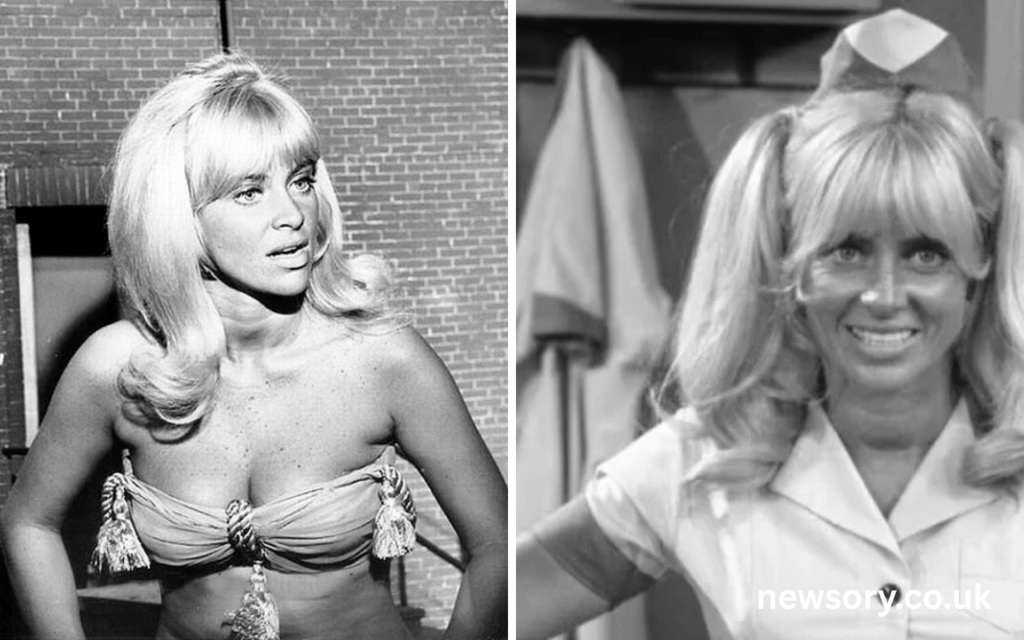

oy Harmon is remembered as one of those classic Hollywood faces whose brief but unforgettable screen presence left a lasting cultural mark. Best known for her iconic appearance in the 1967 film Cool Hand Luke, she represents an era of cinema where even a short role could become legendary. Her journey from modeling and television to film and later entrepreneurship reflects a life shaped by creativity, adaptability, and reinvention.
Joy Harmon Biography and Early Life
Joy Harmon was born on May 1, 1940, in Jackson Heights, Queens, New York, and grew up in a middle-class American household. Her early environment exposed her to a blend of urban culture and traditional values, which helped shape her personality and confidence. From a young age, she showed interest in performing arts, fashion, and public presentation.
During her teenage years, she moved with her family to Connecticut, where she completed her education. She was known for her striking looks and natural charm, qualities that would later help her enter the modeling world. Like many aspiring performers of her time, she balanced academics with early ambitions of working in entertainment.
Her early life was not directly connected to Hollywood, but it laid the foundation for her future career. She developed confidence in front of cameras and audiences, which eventually led her toward modeling competitions and small entertainment opportunities.
Early Modeling and Entry into Hollywood
Before becoming an actress, Joy Harmon worked as a model and participated in beauty pageants, where she gained early recognition. She was a finalist in the Miss Connecticut competition, which opened doors for her in the entertainment industry. Her modeling work helped her build a professional image that Hollywood agents noticed.
Her transition into Hollywood began in the late 1950s and early 1960s when she started receiving small acting opportunities. At first, these were uncredited or minor roles, but they allowed her to gain experience in front of the camera. She slowly became familiar with film sets, directors, and the working style of television productions.
This early phase of her career was important because it gave her exposure to the competitive nature of Hollywood. She learned how to adapt quickly, perform under pressure, and maintain screen presence, all of which would later contribute to her most famous role.
Television Career in the 1960s
During the 1960s, Joy Harmon became active in television, which was rapidly growing as a dominant form of entertainment. She appeared in guest roles on several popular shows of the time, often playing charming or comedic characters. These appearances helped her gain recognition among American audiences.
She was featured in series such as The Beverly Hillbillies, Gidget, Batman, and The Monkees. Each role, though often brief, allowed her to showcase her versatility and on-screen charisma. Television gave her more consistent work compared to film during her early career.
Her TV appearances also helped her connect with casting directors in Hollywood. While she was not yet a leading actress, she was becoming a familiar face in the entertainment industry, building a reputation as a reliable and visually memorable performer.
Breakthrough Role in Cool Hand Luke
Joy Harmon’s most iconic moment came in 1967 with the film Cool Hand Luke, starring Paul Newman. In the movie, she played the role of “Lucille,” the girl in the famous car wash scene. Although her screen time was limited, the impact of that scene was extraordinary.
The car wash sequence became one of the most talked-about moments in the film. It captured attention due to its playful tone, visual appeal, and cultural context of the 1960s. Even decades later, the scene continues to be referenced in discussions about classic Hollywood cinema.
This role transformed Joy Harmon from a supporting actress into a memorable pop culture figure. While she did not become a traditional leading star, her brief appearance ensured her place in film history.
Other Film Roles and Acting Style
Beyond Cool Hand Luke, Joy Harmon appeared in several films throughout the 1960s, including Under the Yum Yum Tree, Village of the Giants, and Angel in My Pocket. These roles often placed her in comedic or lighthearted characters that suited her screen presence.
Her acting style was natural, expressive, and visually engaging rather than heavily dramatic. She was often cast in roles that highlighted her beauty and charm, which was a common trend for actresses of that era. Hollywood at the time frequently emphasized visual appeal alongside performance.
Although she never became a major leading actress, her filmography reflects the journey of many working actresses of the 1960s who contributed to cinema in supporting but memorable ways.
Public Image and 1960s Hollywood Fame
During her peak years, Joy Harmon was part of the vibrant Hollywood culture of the 1960s. She was seen as part of a generation of actresses who represented glamour, youth, and the evolving style of American cinema. Her appearances in films and television made her recognizable to audiences across the United States.
Her public image was largely shaped by her role in Cool Hand Luke, which gave her a lasting association with one of the most famous films of its time. Media coverage often highlighted her beauty and her brief but impactful screen moments.
Despite not pursuing long-term stardom, she maintained a strong presence in Hollywood memory. Her image continues to be associated with classic cinema aesthetics and the golden age of supporting actresses.
Transition Away from Acting
By the early 1970s, Joy Harmon gradually stepped away from acting. The entertainment industry was changing, and she chose to focus on a more private and stable lifestyle. Her decision reflected a personal shift rather than a public decline in popularity.
Leaving Hollywood allowed her to explore other interests beyond acting. She prioritized family life and personal fulfillment, stepping away from the demanding nature of film and television work. This transition marked a significant change in her life path.
Her departure from acting did not diminish her legacy. Instead, it added depth to her story, showing that her identity extended beyond Hollywood fame.
Aunt Joy’s Cakes and Business Life
After leaving acting, Joy Harmon found a new passion in baking and eventually built a successful business called Aunt Joy’s Cakes in Burbank, California. What began as a small passion for baking turned into a well-known bakery serving both local customers and entertainment industry professionals.
Her bakery became especially popular in Hollywood circles, where personalized cakes and homemade desserts were in demand. She developed a reputation for quality, warmth, and creativity in her baking work. This business gave her a completely new professional identity.
Through her bakery, she demonstrated that success can take many forms beyond acting. Her entrepreneurial journey became an inspiring example of reinvention after Hollywood.
READ MORE: http://Nathalie Dompé: Italian Business Leader, Fashion Figure, and Modern Pharmaceutical Influence
Legacy and Cultural Impact
Joy Harmon’s legacy is strongly tied to her unforgettable role in Cool Hand Luke, but her life story extends beyond a single film moment. She represents a generation of actresses who contributed to classic Hollywood in meaningful but often understated ways.
Her car wash scene remains one of the most recognizable moments in 1960s cinema, frequently discussed in film studies and pop culture retrospectives. Even with limited screen time, she achieved a level of lasting recognition that many actors aspire to.
Beyond film, her successful transition into business adds another layer to her legacy. She is remembered not only as an actress but also as a creative individual who built a fulfilling life outside Hollywood.